

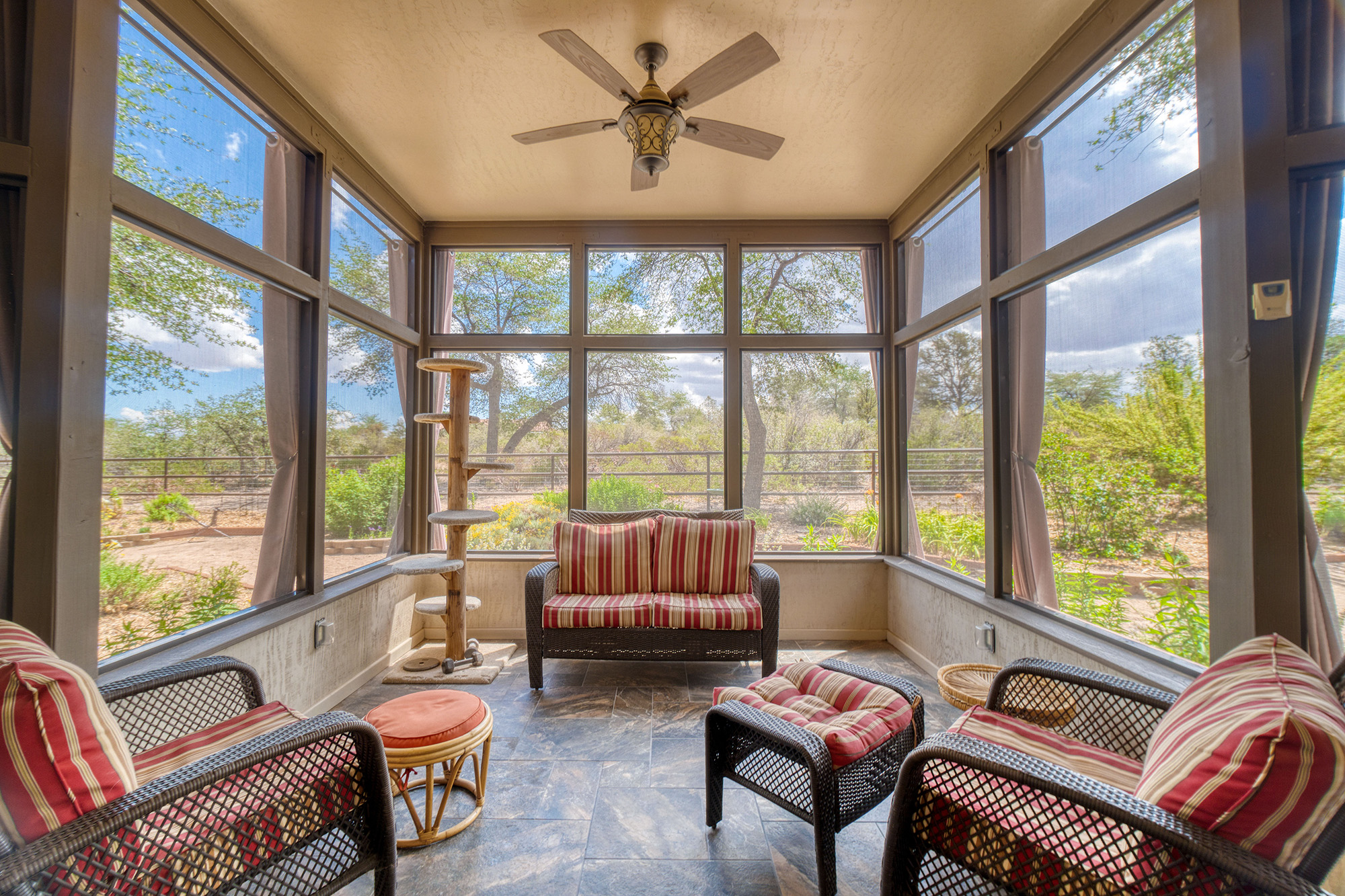
Sunrooms and enclosed porches occupy a strange middle ground between indoor and outdoor space, and that in-between quality is exactly why so much flooring fails there faster than expected. These rooms see more direct sun exposure than the rest of the house, wider temperature swings depending on whether the AC reaches that far, and often higher humidity if the space is not fully sealed.
Knowing which materials struggle in this environment can save homeowners from an expensive redo within just a few years of installation.
Solid Hardwood Rarely Holds Up
Solid hardwood is one of the least suited materials for a Florida sunroom, even when the rest of the home has beautiful hardwood floors. The combination of direct sunlight, temperature swings, and humidity that a sunroom experiences causes solid wood to expand, contract, cup, and fade far faster than it would in a climate controlled interior room.
Homeowners who love the hardwood look throughout their home often assume it can extend into the sunroom, only to find warping and gapping appearing within a year or two. This is one of the most common and most avoidable flooring mistakes in coastal Florida homes.
Standard Laminate Struggles With Moisture Swings
Traditional laminate flooring is built around a wood fiber core that reacts poorly to the humidity fluctuations common in a sunroom, especially one that is not consistently air conditioned. Even laminate marketed as water resistant is typically rated for spills and light moisture, not the sustained humidity swings a sunroom experiences across seasons.
Newer waterproof hybrid laminate products have closed some of this gap, but standard laminate remains a poor match for this specific room type regardless of how well it performs elsewhere in the house.
Wall to Wall Carpet Traps Moisture and Fades Quickly
Carpet in a sunroom faces two separate problems at once. UV exposure through the glass fades carpet fiber noticeably faster than in any other room, and the humidity that builds up in an enclosed, sun heated space gets trapped in the carpet backing where it can lead to mold or mildew over time.
Even high quality carpet built for durability elsewhere in the home is simply the wrong material category for this kind of light and moisture exposure.
What Actually Performs Well Instead
Porcelain tile and waterproof LVP both handle the heat, light, and humidity swings of a sunroom far better than hardwood, standard laminate, or carpet. Tile in particular resists UV fading almost entirely and tolerates the temperature extremes of an uncooled sunroom without the expansion issues that affect wood based products.
Waterproof LVP with a strong UV-resistant wear layer is a solid second option, offering more warmth underfoot than tile while still standing up to the conditions that make sunrooms so demanding on flooring.
A Note on Enclosed Porches Specifically
Enclosed porches that were originally screened-in and later converted often have less insulation and less consistent climate control than a true sunroom addition, which makes material selection even more important. These spaces frequently see the widest daily temperature swings in the entire home.
Before choosing flooring for a converted porch, it is worth having an honest conversation about how the space is actually insulated and conditioned, since that context changes which materials will genuinely hold up.
If you are flooring a sunroom or enclosed porch and want a material that will actually last in that environment, Carpet & Tile Warehouse can help you choose the right option for your specific space. We proudly serve Vero Beach, Fort Pierce, Sebastian, Indian River, South Beach, Port St. Lucie from Vero Beach, FL (770 8th Ct). Contact us to talk through your project, or browse our tile collection for options built to handle heat and sun exposure.


