

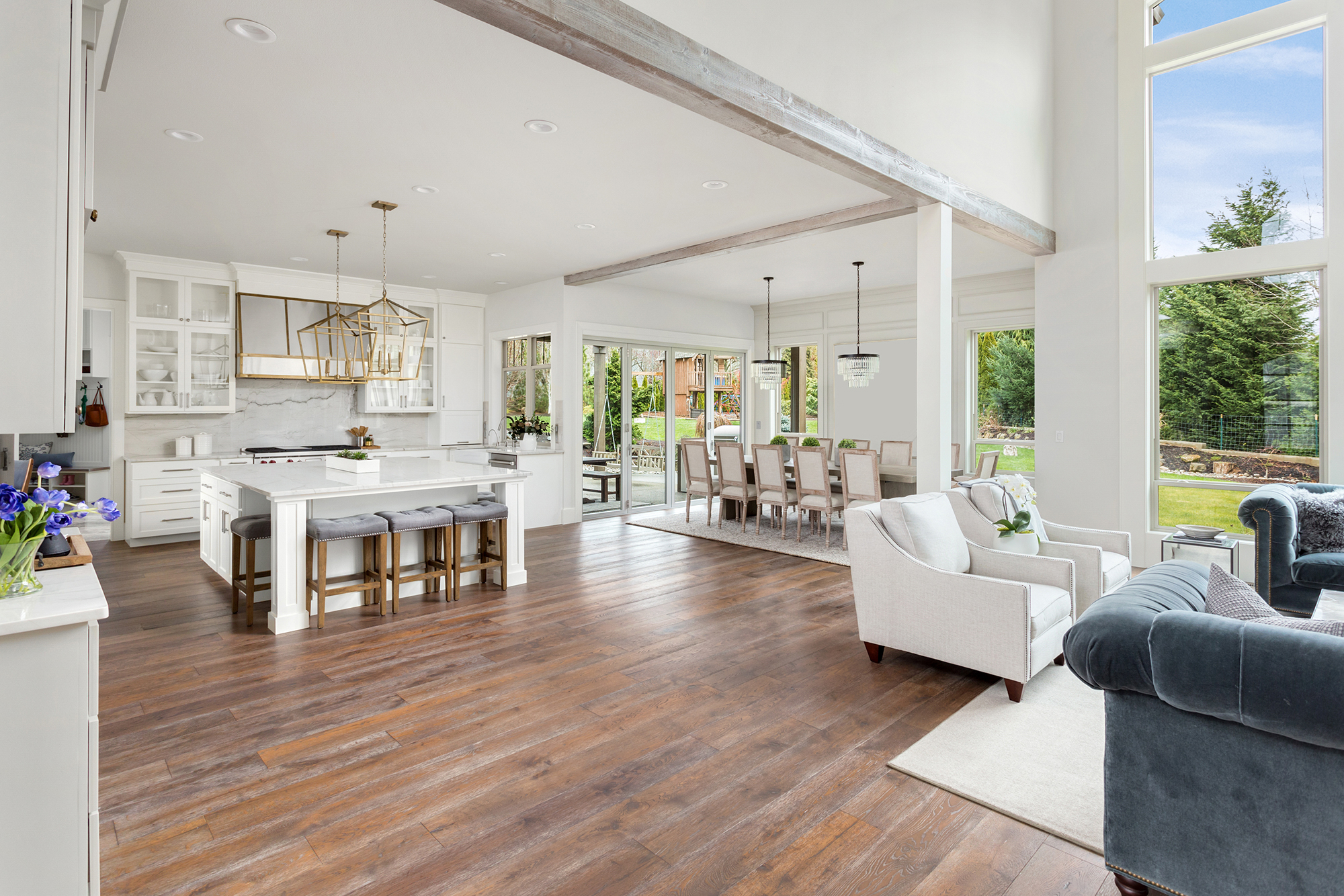
Homes in low lying areas or near canals and waterways face a real question when it comes to flooring, since even a well-prepared property can experience some degree of water intrusion during a serious storm. Tile has long been considered the safe default in these situations, but engineered hardwood has closed much of that gap with modern construction methods, and choosing between them now comes down to more than just flood risk alone.
Both are excellent products, and understanding how each one actually performs during and after a flooding event helps homeowners make a decision based on facts rather than outdated assumptions.
How Each Material Responds to Standing Water
Tile itself is essentially unaffected by standing water, since porcelain and ceramic are non-porous once fired and sealed. The real risk with tile during a flood event is what happens underneath it, since a saturated subfloor or trapped moisture can eventually cause problems even though the tile surface itself survives intact.
Engineered hardwood is built with a plywood or high density core topped with a real hardwood veneer, and while it is more water resistant than solid hardwood, it is not waterproof. Brief exposure can often be salvaged if caught quickly and dried properly, but prolonged submersion during a serious flood event will typically require replacement.
Recovery Time and Repair Complexity After a Storm
Tile floors that survive a flood event usually require the subfloor to dry and be tested before any repair work begins, but the tile itself often does not need replacement unless individual pieces cracked or shifted. This can mean a faster overall recovery in homes where flooding was brief.
Engineered hardwood that has taken on water needs a more involved assessment, since the core material and the way boards were installed both affect whether drying in place is realistic or whether replacement is the safer call. This is a real consideration for homes in flood-prone areas, though it does not mean hardwood should be ruled out entirely.
Everyday Comfort and Design Versus Flood Risk
Outside of an actual flood event, engineered hardwood offers a warmth and comfort underfoot that many homeowners specifically want in living rooms and bedrooms, along with a classic look that tile does not fully replicate even in wood-look styles. For homes that flood rarely or only during the most extreme events, this comfort factor often outweighs the marginal flood risk difference.
Tile continues to be the stronger choice for homes with a more frequent flood history, or for specific ground-level rooms that have taken on water more than once, regardless of how the rest of the home is finished.
A Practical Approach for Storm Prone Properties
Many homeowners in flood-prone parts of Florida choose a hybrid approach, using tile in ground level rooms with the highest flood exposure and reserving engineered hardwood for upper level spaces or rooms further from known water entry points. This lets you get the durability where it matters most without giving up the warmth of hardwood everywhere else.
The right mix depends on your home's specific flood history and layout, which is worth discussing in detail before making a final decision on either product.
Whether your home calls for tile, engineered hardwood, or a thoughtful mix of both, Carpet & Tile Warehouse can help you plan flooring that fits your flood risk and your style. We proudly serve Vero Beach, Fort Pierce, Sebastian, Indian River, South Beach, Port St. Lucie from Vero Beach, FL (770 8th Ct). Contact us to talk through your home's specific situation, or explore our tile collection and hardwood collection to compare options.


