

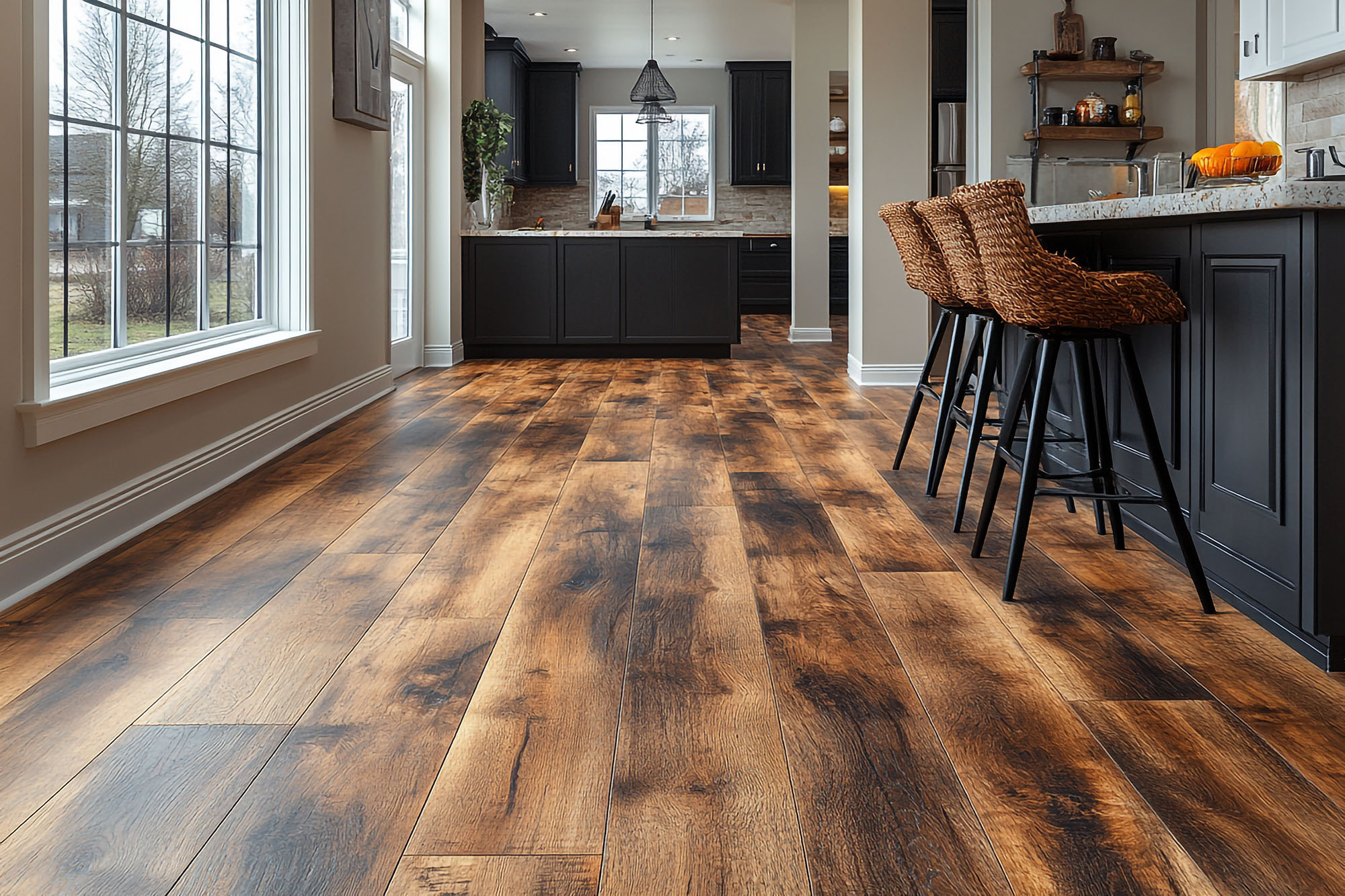
Hardwood is graded well before it ever reaches a showroom floor, and that grading determines how much natural variation, knots, and grain movement show up in the finished product. Clear grade hardwood is selected for its uniform color and minimal visible grain character, while character grade hardwood intentionally includes knots, mineral streaks, and tonal variation from board to board.
Neither grade is a compromise version of the other. They are two genuinely different looks, and understanding how each one lives in a Vero Beach home helps you choose based on what actually fits your space, rather than assuming one grade is simply the upgraded version of the other.
How Each Grade Is Actually Selected
Clear grade hardwood goes through a more selective sorting process, pulling boards with the most consistent color and the fewest visible knots or mineral streaks. This selectivity is part of why clear grade often costs more per square foot, since fewer boards from each harvested batch qualify for this grade.
Character grade hardwood uses a wider range of boards from the same species, including natural markings that clear grade sorting would set aside. This is not a lower quality product, it is simply a different visual standard applied during the grading process.
How Each Grade Looks In A Room
Clear grade hardwood creates a clean, uniform look that reads as sleek and modern, particularly in contemporary spaces with simple lines and neutral palettes. The consistency from board to board makes the floor feel calm and unobtrusive, letting other design elements in the room take more visual focus.
Character grade hardwood brings warmth and visual interest to a space on its own, with each board reading as slightly different from the next. This grade tends to suit more traditional, coastal, or lived-in design styles where the floor itself is meant to feel like part of the home's character rather than a neutral backdrop.
Which Grade Handles A Coastal Home's Wear Better
Both grades perform similarly in terms of durability, since grade refers to appearance rather than structural quality or moisture resistance. That said, character grade hardwood does have a practical advantage in disguising the everyday marks of life in an active household, since scuffs and minor wear blend more easily into a floor that already has natural variation built in.
Clear grade hardwood, with its more uniform surface, tends to show scratches and wear marks slightly more visibly over time, simply because there is less existing variation to visually absorb them.
Cost Differences Between The Two Grades
Character grade hardwood is often, though not always, more budget friendly than clear grade, since the selection process is less restrictive and more of each harvested batch qualifies. This is not a guaranteed rule across every species and manufacturer, so it is worth comparing actual samples and pricing side by side rather than assuming one grade is always less expensive.
The bigger cost factor in most cases comes down to species and construction type, solid versus engineered, rather than grade alone, so grade should be treated as a style decision first and a budget lever second.
The right choice between character grade and clear grade hardwood comes down to the overall style of your home and how much visual movement you want the floor itself to contribute to a room. Neither grade is the safer or more correct choice, they simply serve two different design goals equally well.
If you want to see how character grade and clear grade hardwood actually compare in your home's lighting, Carpet & Tile Warehouse can bring both side by side for you. We proudly serve Vero Beach, Fort Pierce, Sebastian, Indian River, South Beach, Port St. Lucie from Vero Beach, FL (770 8th Ct). Contact us to schedule a visit, or browse our hardwood collection to compare current options.


